
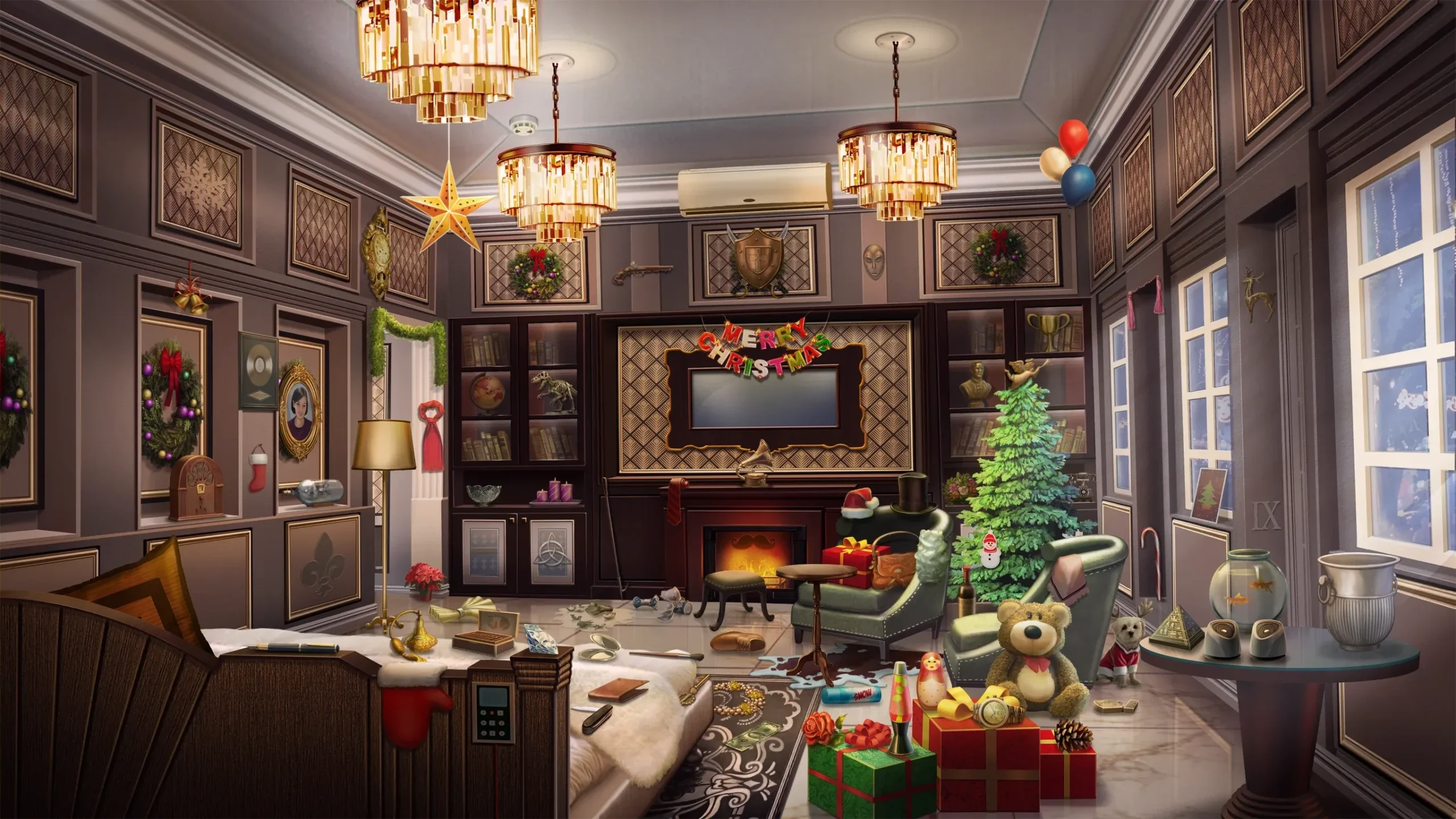
There’s a moment in every great escape room when the door shuts and the ordinary world falls away. The clock starts. Your senses sharpen. Suddenly, the colors on the wall, the scraps of paper pinned to a board, and the images scattered across a desk are no longer decoration they’re clues. At Mastermind Escape KC, that shift from spectator to participant is carefully engineered, and much of it happens through visual design. The best rooms don’t just challenge your brain with locks and riddles; they pull you into a story, and visuals are the quiet engine that makes that story feel real.
Why visuals matter in an escape room
Before you ever touch a puzzle, you’re already solving one with your eyes. You scan the space, looking for patterns, inconsistencies, and meaning. Strong visual design reduces confusion in the right places and amplifies it in others, guiding players without them ever realizing they’re being guided. It’s a balance between clarity and mystery too clean, and the room feels like a sterile test; too chaotic, and players get overwhelmed and frustrated.
At Mastermind Escape KC, every room is built around a narrative: a missing person, a secret laboratory, a heist gone wrong. Visuals are the first layer of that narrative. Weathered maps, torn photographs, newspaper clippings, and layered images make the world feel lived-in. They tell you, “People were here before you,” which immediately raises the stakes.
Turning images into interactive clues
One of the most powerful tools for creating this sense of depth is thoughtful visual layering. When designers assemble images, textures, and symbols into a unified scene, they’re doing more than decorating they’re building a puzzle landscape. This is where tools for creating a strong collage design can be surprisingly useful, even in a physical escape room context. By experimenting digitally first, creators can arrange images, test visual flow, and refine how clues connect before bringing them into the real world.
A well-crafted visual layout can communicate relationships without a single written instruction. For example, three photographs placed in a deliberate triangle might subtly suggest a sequence. A faded stamp repeated across multiple documents can hint that they belong to the same source. Even the way images overlap what’s partially hidden versus fully visible can become part of the puzzle itself.
From lobby to live room: storytelling that starts early
At Mastermind Escape KC, immersion often begins before you enter the room. The lobby isn’t just a waiting area; it’s an introduction to the kind of experiences you’re about to have. Posters, props, and themed decor set expectations. This is intentional. When players step into a room already primed with a visual language, they’re more likely to pick up on subtle clues.
Imagine walking into a room styled like a 1920s detective office. If the lobby already featured vintage typewriters, sepia-toned photos, and period newspapers, your brain is already tuned to look for similar elements inside the puzzle space. You’re not just reacting you’re anticipating.
Building puzzles with visual layers
Great escape rooms don’t rely on a single “aha” moment. They build toward it. Visual design supports this by creating layers of discovery.
The first layer is surface-level: what looks interesting or out of place? A brightly colored image among muted tones, a clean photo in a dusty room, or a frame that doesn’t quite match the others.
The second layer is relational: how do these visuals connect? Do certain symbols repeat? Are there patterns in colors, shapes, or placements?
The third layer is functional: how do these visuals translate into actions? Maybe a series of images corresponds to numbers on a lock, or the orientation of pictures mirrors the configuration of objects in the room.
Mastermind Escape KC excels at this kind of multi-layered design. Players rarely solve a puzzle by brute force; instead, they observe, interpret, and piece together visual information collaboratively.
A real-life example: visual storytelling in action
Consider a hypothetical (but very Mastermind-style) scenario: a room themed around a missing art curator. The walls are covered in prints from different artists, some authentic, some forgeries. At first glance, it’s just atmospheric. But as players look closer, they notice that certain images share a watermark, while others don’t. A torn corner of one print matches a missing piece found elsewhere in the room.
Eventually, players realize that the curator left a trail through these images not in words, but in visual patterns. The puzzle isn’t about memorizing facts; it’s about reading a visual narrative.
This is where design thinking meets gameplay. Every image is chosen with purpose, every placement intentional. When players crack the code, it feels earned because they’ve engaged with the space as a whole.
Actionable tips for aspiring escape room creators
If you’re inspired to design your own puzzles whether for a classroom, party, or professional space here are some practical takeaways:
Start with the story.
Before you place a single image, define your narrative. Who lived in this space? What happened here? Your visuals should answer those questions, even if indirectly.
Use contrast strategically.
Mix old and new, bright and muted, organized and chaotic. Contrast draws attention and creates visual hierarchy.
Think in layers.
Don’t cram everything into one obvious clue. Spread meaning across multiple visuals so discovery feels gradual.
Prototype visually first.
Experiment with layouts digitally before committing to physical prints or props. It’s faster, cheaper, and lets you iterate.
Watch players interact.
If possible, test your room with friends and observe how they engage with visuals. Do they notice what you want them to? Are they stuck where you intended them to be challenged?
Why visual design makes teamwork better
Escape rooms are social experiences, and visuals naturally encourage collaboration. One person might spot a pattern in images, another might recall a detail from earlier in the room, and someone else might physically arrange pieces to test a theory.
At Mastermind Escape KC, many puzzles are designed to require multiple perspectives. A collage of clues might only make sense when different players contribute what they’ve seen. This not only makes the game more engaging but also more memorable people leave talking about how they solved it together.
The emotional impact of great visuals
Beyond logic and mechanics, visuals shape how a room feels. Dim lighting and shadowy images create tension. Warm colors and familiar objects can evoke nostalgia. Stark, clinical visuals build unease.
Mastermind Escape KC understands that an escape room isn’t just a test of intellect; it’s an emotional journey. The right visuals can make victory feel sweeter and failure feel like a thrilling near-miss rather than a disappointment.
Looking ahead: where design and puzzles are going
As escape rooms evolve, visual design will only become more sophisticated. Augmented reality, projection mapping, and interactive displays are already starting to blend physical and digital worlds. Yet the core principle remains the same: visuals are storytelling tools first, technology second.
What makes Mastermind Escape KC stand out isn’t flashy gimmicks it’s thoughtful, intentional design that respects players’ intelligence and curiosity.
Conclusion
The magic of a great escape room lies in how seamlessly it weaves story, space, and challenge together. Visual design is the thread that ties it all into something cohesive and compelling. At Mastermind Escape KC, every image, texture, and layout choice serves a purpose, inviting players to look closer, think deeper, and work together.
When you finally beat the clock and step back into the real world, you don’t just remember the locks you opened you remember the room itself, the images that guided you, and the story you became part of. That’s the power of visual storytelling done right.