
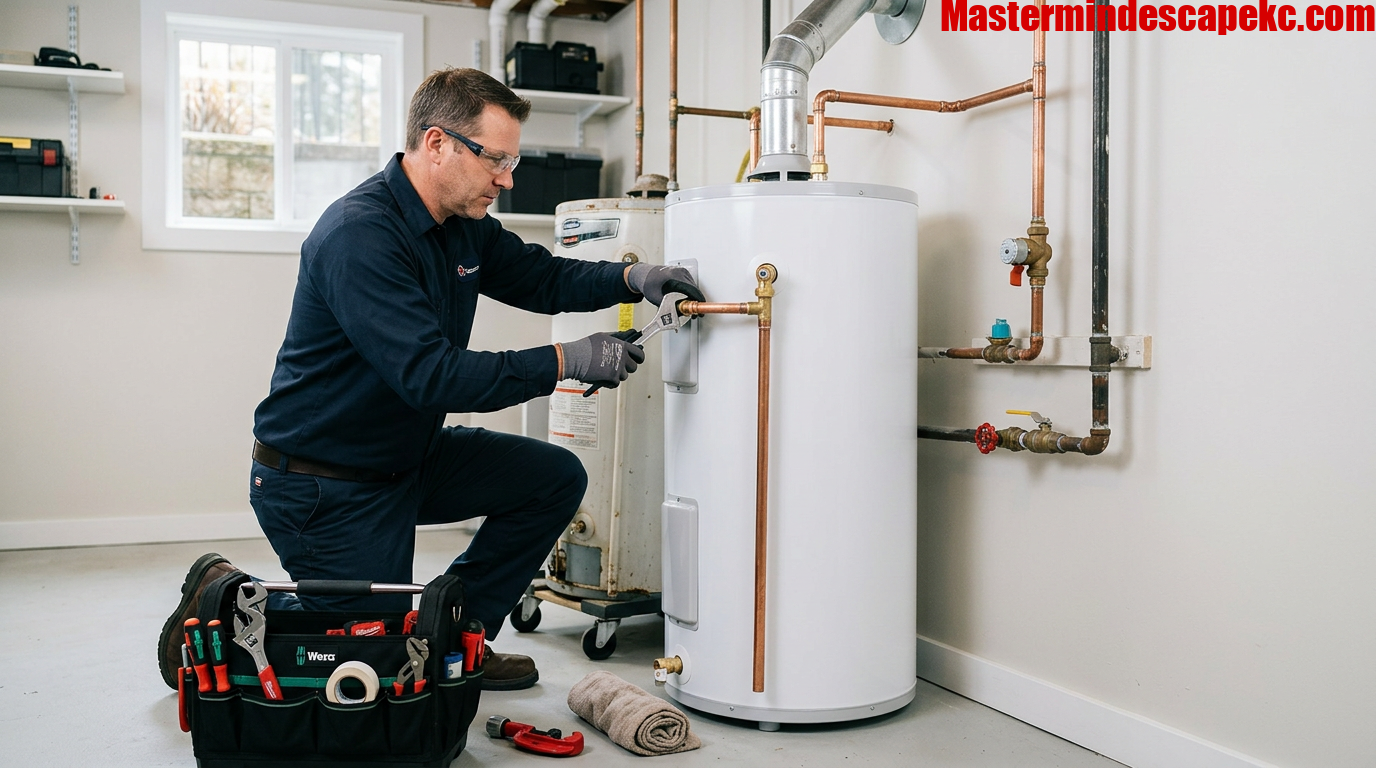
A water heater is one of the most hardworking appliances in any home. From morning showers to washing dishes, we rely on it constantly — and we only truly notice it when something goes wrong. Whether you’re dealing with lukewarm water, strange noises, or a puddle forming around the base of the unit, this guide walks you through everything you need to know about diagnosing, repairing, and — when necessary — replacing your water heater.
Understanding How Your Water Heater Works
Before diving into repairs, it helps to understand the basics of how a water heater operates.
Tank Water Heaters are the most common type found in American homes. Cold water enters the tank through a dip tube, gets heated by either a gas burner or electric heating elements, and is stored until needed. A thermostat regulates the temperature, typically set between 120°F and 140°F.
Tankless (On-Demand) Water Heaters heat water directly as it flows through the unit without storing it. They are more energy-efficient but have different repair and maintenance needs.
Heat Pump Water Heaters extract heat from the surrounding air to warm water and are among the most efficient options available today.
Understanding which type you have is the first step toward diagnosing any problem correctly.
Common Water Heater Problems and What They Mean
1. No Hot Water
If you’re getting no hot water at all, the cause depends on your unit type.
- Gas water heater: The pilot light may have gone out, or the thermocouple could be faulty. Check whether the pilot light is lit. If it keeps going out, the thermocouple — a safety device that senses the pilot flame — likely needs replacement.
- Electric water heater: A tripped circuit breaker or a burned-out heating element is usually the culprit. Reset the breaker first. If that doesn’t work, test the heating elements with a multimeter.
2. Insufficient Hot Water
If the water warms up but runs out quickly, consider these possibilities:
- The tank size may be too small for your household’s demand.
- One heating element (in electric units) may have failed, leaving only half the tank’s capacity functional.
- Sediment buildup at the bottom of the tank may be reducing efficiency and effective storage capacity.
- The thermostat may be set too low — try raising it to 120°F–125°F.
3. Water Is Too Hot
Scalding water is both a safety concern and a sign of a malfunctioning thermostat. Check the thermostat setting and lower it if needed. If the temperature doesn’t respond to adjustments, the thermostat itself may need to be replaced.
4. Discolored or Rusty Water
Rusty or brownish water coming from your hot tap is a sign that the anode rod inside your tank has been depleted. The anode rod is a sacrificial metal rod (usually magnesium or aluminum) designed to corrode in place of the tank lining. Once it’s worn out, the tank itself begins to rust from the inside. Replacing the anode rod every 3–5 years is one of the most important preventive maintenance steps a homeowner can take.
If the rust is severe and you notice it in both hot and cold water, the problem may be with your pipes rather than the water heater.
5. Rotten Egg or Sulfur Smell
A sulfur smell in hot water is usually caused by a reaction between the anode rod and sulfate bacteria in the water supply. Replacing the magnesium anode rod with an aluminum/zinc rod often resolves this issue. You can also flush the tank with a diluted hydrogen peroxide solution.
6. Popping, Rumbling, or Banging Noises
These sounds almost always point to sediment buildup at the bottom of the tank. Over time, minerals from hard water accumulate, and as water is heated, it forces its way through the sediment layer, causing the noise. Flushing the tank annually can prevent this from becoming a serious problem.
A high-pitched whining sound in electric water heaters may indicate scale buildup on the heating elements.
7. Water Leaks
Leaks require immediate attention. The source of the leak determines the seriousness of the issue:
- Around the pressure relief valve (T&P valve): This valve releases pressure when it gets too high. If it’s dripping, it could be doing its job — or it could be faulty. Never plug or cap the T&P valve. If it continues to release water, replace it.
- From the top of the unit: Usually a loose cold or hot water connection — easy to tighten.
- From the bottom of the tank: This is the most serious scenario. A leak from the tank itself typically means internal corrosion and signals that full replacement is needed.
DIY Repairs You Can Tackle Yourself
Several water heater repairs are well within the capability of a handy homeowner. Here are the most common DIY fixes:
Relighting a Pilot Light (Gas Units)
- Turn the gas control knob to “Pilot.”
- Press and hold the igniter button while holding down the gas control knob.
- Continue holding for about 60 seconds after the flame ignites.
- Release slowly and turn the knob to your desired temperature.
If the pilot won’t stay lit, the thermocouple likely needs replacement — a relatively inexpensive part available at most hardware stores.
Replacing Heating Elements (Electric Units)
- Turn off the power to the unit at the breaker panel.
- Connect a garden hose to the drain valve and drain the tank.
- Remove the access panel and disconnect the wiring from the faulty element.
- Use an element wrench to unscrew and pull out the old element.
- Install the new element, reconnect wiring, refill the tank, and restore power.
Always confirm power is off with a non-contact voltage tester before touching any wiring.
Replacing the Anode Rod
- Shut off the cold water supply and turn off power or gas to the unit.
- Locate the anode rod — usually under a plastic cap on top of the heater or through a port on the side.
- Use a 1-1/16″ socket wrench to remove it (this may require significant torque on older units).
- Wrap the new rod’s threads with Teflon tape and install it hand-tight, then snug with the wrench.
- Turn water and power back on.
Flushing the Tank
Annual flushing removes sediment and prolongs tank life significantly.
- Turn off power or gas.
- Connect a garden hose to the drain valve at the bottom of the tank.
- Open a hot water tap somewhere in the house to allow air in.
- Open the drain valve and let water flow until it runs clear.
- Close the valve, remove the hose, refill the tank, and restore power or gas.
Replacing the T&P Relief Valve
- Shut off power and water supply to the unit.
- Drain a few gallons from the tank to lower water below the valve level.
- Disconnect the discharge pipe from the valve.
- Unscrew the old valve with a pipe wrench.
- Wrap threads of the new valve with Teflon tape and install, then reconnect the discharge pipe.
When to Call a Professional
While DIY repairs can save money, some situations demand professional expertise. Call a licensed plumber or HVAC technician if:
- You smell gas near the unit (leave the house immediately and call your gas company first).
- The tank is actively leaking from the body of the unit.
- You’re uncomfortable working with gas lines or electrical systems.
- The unit is more than 10–12 years old and experiencing repeated problems.
- Repairs require pulling permits (many jurisdictions require permits for gas line work or full replacements).
Professionals bring the right tools, code knowledge, and insurance to handle complex or hazardous repairs safely.
Water Heater Maintenance Tips to Extend Lifespan
Proactive maintenance is far cheaper than emergency repair or replacement. Here’s a simple annual checklist:
- Flush the tank to remove sediment buildup.
- Inspect the anode rod and replace it if more than 50% depleted.
- Test the T&P relief valve by briefly lifting the lever to ensure it opens and closes freely.
- Check the thermostat setting — 120°F is ideal for most households.
- Inspect all connections and fittings for signs of corrosion or moisture.
- Insulate the first few feet of hot and cold water pipes to improve efficiency.
- Check the area around the unit for any signs of dripping or moisture damage.
For tankless units, descale the heat exchanger annually, clean the inlet filter screens, and inspect the venting for obstructions.
How Long Does a Water Heater Last?
The average lifespan of a tank water heater is 8 to 12 years. Tankless models can last 15 to 20 years with proper maintenance. If your unit is nearing or past this age range and you’re experiencing problems, it’s often more economical to replace rather than repair.
Signs that replacement is the right call include:
- Persistent leaks from the tank body
- Rust or corrosion visible on the unit
- Frequent repair needs in a short period
- Significantly reduced efficiency or hot water output
- The unit is more than 12 years old
Understanding Replacement Costs
When repairs no longer make financial sense, replacement becomes the next step. Costs vary depending on the type of unit, capacity, installation complexity, and your geographic location.
National average costs for water heater replacement typically range from $800 to $1,800 fully installed, including parts and labor. High-efficiency or tankless units can cost significantly more upfront but deliver long-term savings on energy bills.
If you’re a homeowner in the northeastern United States, it’s worth researching the hot water heater replacement cost NJ specifically, as New Jersey has higher-than-average labor rates, local permitting requirements, and specific code considerations that can all influence the final price. Getting multiple quotes from licensed local contractors is always recommended to ensure you’re paying a fair rate.
For energy-efficient replacements, also check for available federal tax credits and local utility rebates — in many states, these can offset a meaningful portion of the installation cost.
Choosing the Right Replacement Unit
If replacement is on the horizon, here are the key factors to consider:
Fuel Type: Gas water heaters heat water faster and cost less to operate monthly, but have higher upfront costs. Electric units are simpler to install and maintain.
Tank vs. Tankless: Tank units are less expensive upfront; tankless models offer endless hot water and greater efficiency over time.
Capacity: For tank units, a general guideline is 30–40 gallons for 1–2 people, 40–50 gallons for 3–4 people, and 50–80 gallons for larger households.
Energy Factor (EF) Rating: The higher the EF rating, the more efficient the unit. Look for ENERGY STAR-certified models for the best long-term savings.
Warranty: Look for units with at least a 6-year tank warranty. Premium models often offer 10–12 year warranties, which can reflect better build quality.
Final Thoughts
A water heater that’s properly maintained and repaired when needed can serve your household reliably for well over a decade. Many common problems — a burned-out element, a depleted anode rod, a tripped breaker, or sediment buildup — are entirely manageable with basic tools and a little confidence.
That said, knowing when to call in a professional is just as important as knowing how to handle a repair yourself. Gas systems, significant leaks, and aging units near the end of their service life are situations where professional eyes and hands make all the difference.
Whether you’re fixing a minor issue today or planning ahead for eventual replacement, the knowledge in this guide gives you the foundation to make informed, cost-effective decisions about one of your home’s most essential systems.